

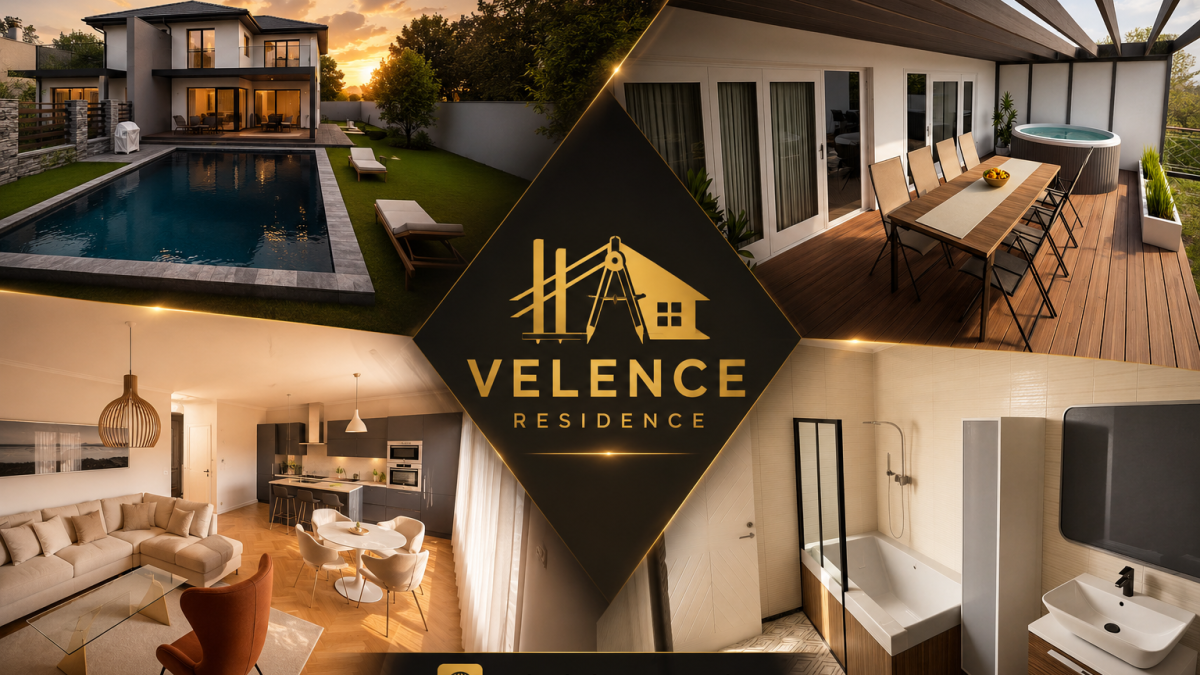
For a lot of international buyers, the idea of purchasing a new-build home in a country they don’t live in yet sounds more complicated than it usually is. There’s an assumption that buying „sight unseen” or from a distance means giving up control — over quality, over timelines, over what you’re actually going to receive when the keys are handed over. In reality, a well-run new-build project, particularly one built around passive-house principles and smart-home technology, tends to be one of the more transparent ways to buy property, precisely because so much of it is documented, staged, and verifiable before you ever move in.
Here’s what actually matters if you’re evaluating a new-build villa in Hungary — using a passive-house, smart-home project on Lake Velence as a working example.
What „passive house” actually means for you as a buyer
The term passive house gets used loosely in real estate marketing, so it’s worth knowing what it should actually guarantee. A genuine passive-house-oriented build combines high-performance insulation, airtight construction, elimination of thermal bridges, and a mechanical ventilation system that recovers heat rather than losing it every time the air is exchanged. The result, in plain terms, is a home that stays comfortable with a fraction of the heating and cooling energy a conventional house would need.
For a buyer, this translates into two very concrete things: noticeably lower utility bills over the life of the home, and a more even, comfortable indoor climate — no cold corners near windows in winter, no unbearable upstairs heat in summer. When combined with underfloor heating, ceiling cooling, a heat pump system, and solar panels, as is common in this type of build, the home is designed to cover a large share of its own energy needs rather than depending entirely on the grid.
If you’re comparing listings, it’s worth asking directly what heating and cooling system is installed, whether solar generation is included, and how the building envelope was constructed — the answers tell you whether „energy efficient” is a genuine design principle or just a marketing phrase.
Smart home features: less about gadgets, more about control from a distance
For an international buyer, smart-home functionality has a practical value that goes beyond convenience: it means you can actually see and manage your property from another country. Tablet- or app-controlled lighting, motorized blinds, and security features mean you’re not relying on a neighbor or property manager to check whether everything is in order — you can see it yourself, whether you’re two streets away or two countries away.
This matters in very ordinary ways. Motorized shutters that lower automatically before a summer afternoon gets too hot help protect the home’s energy efficiency even when nobody is there to manage it manually. Presence-simulation lighting means the property doesn’t sit visibly empty for weeks between visits. And because these systems are typically built to keep basic local functions working even without an internet connection, you’re not left without control during a temporary outage.
How the payment process typically works — and why that structure protects you
One of the more reassuring aspects of a well-structured new-build purchase is that you are not asked to pay the full price upfront for a home that doesn’t exist yet. A typical structure works in stages tied to construction milestones: an initial payment (often split into a booking deposit and an advance payment) totaling around 20% of the price, followed by further installments as the build reaches roughly 60% and 80% completion, with the remaining balance due at handover. In the Velence Residence project, for example, the expected handover is around seven months after the initial deposit is paid.
This staged approach matters for two reasons. First, it means your capital is released gradually, in step with visible, verifiable progress — not handed over in a single lump sum against a promise. Second, it gives you natural checkpoints to review construction photos, videos, or an in-person visit before committing the next installment. If you’re buying from abroad, ask specifically how progress is documented between milestones — photo updates, video walkthroughs, and site visit opportunities are all reasonable things to request.
What this means if you’re weighing it as an investment
It’s worth being direct about something international buyers are often told with more confidence than the market actually justifies: no property purchase comes with a guaranteed return. What can genuinely be said is that certain factors reduce risk and support long-term value — a location with year-round (not just seasonal) demand, low running costs from energy-efficient design, transparent construction and payment processes, and build quality that will still look modern in a decade rather than dated in three years. A passive-house, smart-home villa on Lake Velence checks each of those boxes without anyone needing to promise a specific number.
Questions worth asking before you commit
A short, direct list of questions tends to reveal more about a project than any brochure. Ask what brand and type of heat pump is installed, since this affects both running costs and the availability of servicing down the line — a recognized brand with local support matters more than it might seem from a distance. Ask how the walls and foundation were built, since airtightness and structural stability depend as much on construction technique as on the finished appearance. Ask whether the garden includes its own water supply, such as a drilled well, and how irrigation and wastewater are handled — details like a private well or a bio-digester system affect ongoing costs in ways that aren’t always obvious from photos.
It’s also reasonable to ask how many similar homes the developer has completed before, and to request references or examples of finished work rather than renderings alone. A developer confident in their build quality will usually be glad to share this; hesitation on straightforward questions like these is itself useful information.
A practical starting point
If you’re seriously considering a new-build purchase in Hungary from abroad, the most useful first step isn’t a spreadsheet of price comparisons — it’s a direct conversation with the developer about the technical specification, the payment schedule, and how they document progress for buyers who can’t be on-site every week. A project that answers those questions clearly, without vagueness, is usually one worth taking seriously.
If you’d like to see exactly how this works for the Velence Residence villas — from technical specification to payment schedule — feel free to get in touch directly.
📞 +36 30 529 0508 📩 hello@eladohazmost.hu 🌐 eladohazmost.hu 📍 2481 Velence, Hungary
This article is for general information only and does not constitute financial or investment advice. Please consult an independent advisor regarding your personal circumstances before making a purchase decision.